
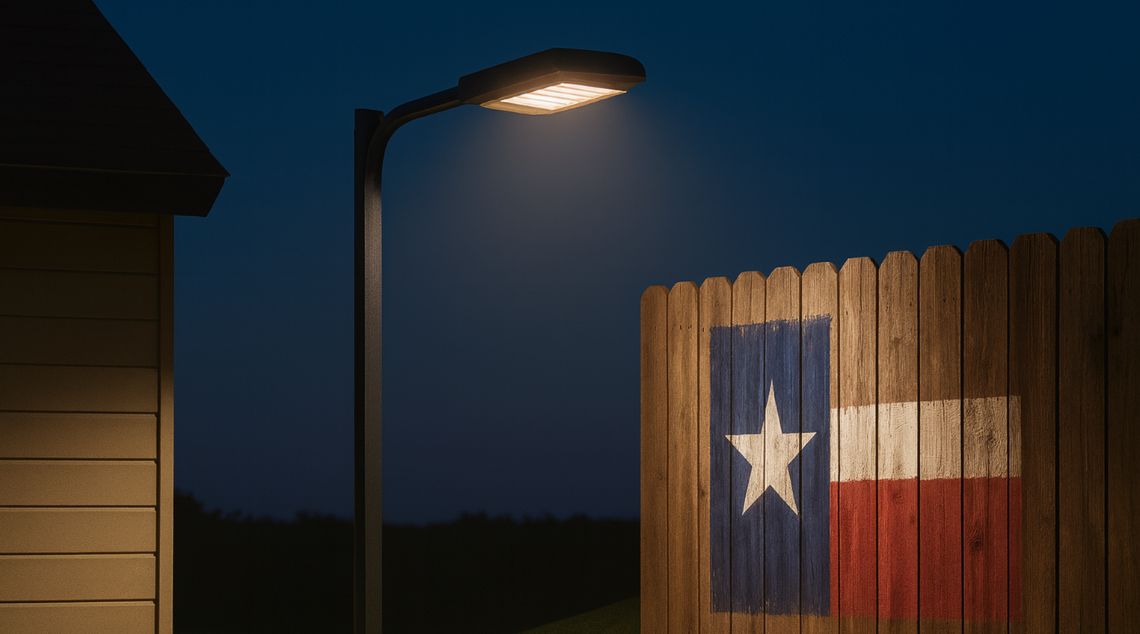
Lights are being designed for a community with an ordinance that does not allow light trespass. How do you know the light will comply with that requirement before it’s installed? Or, a street light near you or your own outdoor light might be shining into your or your neighbor’s window. How do you fix it? Is the only solution to turn it off? Not so fast! One of the keystones of our Responsible Outdoor Lighting program is shielding: with the right physical barriers, you can keep lights aimed at the property it is intended to light and out of everyone else’s eyes (and the local night sky).
Shielding is most economically done prior to installing the fixture. This shield calculator is especially helpful in pre-construction reviews in areas with outdoor lighting ordinances that do not allow light trespass. Including a shield in the initial requirements and installation prevents incurring the additional cost of a lift or bucket truck to add it later.
How do you determine the right shield to request from the manufacturer of the light or to create for your own light installation? You can wiggle around through trial and error, or you can try the DarkSky Texas Light Shield Calculator. This tool will help you determine the optimal size light shield for a specific light to eliminate light trespass and minimize that light’s impact on other properties and local light pollution.
Most lighting manufacturers of commercial light fixtures will offer 360 degree shields and house-side shields. The 360 degree shields are preferable due to the tendency of house-side shields to create more glare on the side opposite the shield.
After you use the calculator to determine the shield depth needed to prevent light trespass, you will want to select the manufacturer’s shield that is at least that deep. If the light’s manufacturer does not list a 360 degree shield on the specification sheet for the fixture, have the distributor that is selling the fixture ask for one. If they do not make one, many local sheet metal fabricators can make it.
Why You Should Use This Calculator
Our light shield calculator has a straightforward goal: to help you, or the lighting reviewer in your community, choose the right size of shield for outdoor lights, without any guesswork or hassle.
But why is it necessary to shield outdoor lights in the first place? That’s because unshielded outdoor lights will disperse across the surroundings, and with no control over where they’re directed, they can easily illuminate where they shouldn’t. The results?
- A blinding glare that makes it harder for cars or passing pedestrians to see at night.
- A reflected, uncomfortable shine into your neighbor’s yards or windows, known as light trespass.
- The wildlife in the area may see the light, become confused, and be attracted to your property, or get lost while trying to avoid it.
- The peripheral light will disperse and contribute to skyglow, dimming the stars.
- Wasted electricity (and money!) by illuminating areas that don’t need to be lit.
Fortunately, these problems are easy to fix: a simple shield, in the right place and the correct size, can keep your lights contained and efficient. Our calculator tells you the minimum depth you need!
How the Calculator Works (Simple Version)
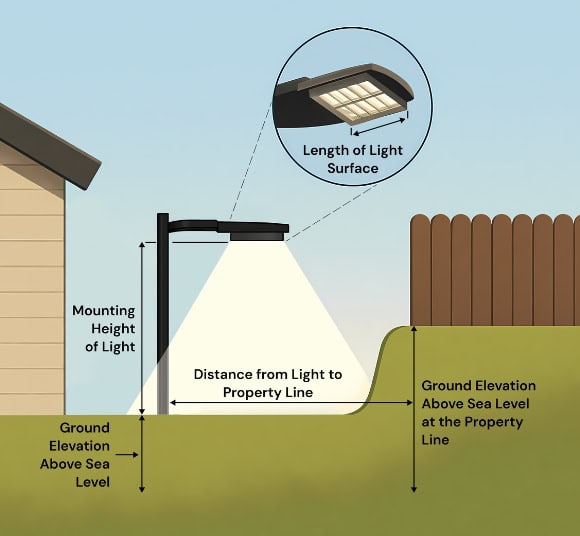
The goal of our calculator is to keep things simple and straightforward for you. It all starts with a few quick measurements. After all, the right coverage comes down to numbers.
- What’s the longest side of the light to be shielded? This is the longest side of the surface of the light. Put this value where it says “Longest length of proposed shield (in inches)”
- What’s the ground elevation where the light is installed? Depending on where you live, you may need to check an online app or topo map. Put this value where it says “Ground Elevation where light is installed (in feet)”
- How high is your light? Measure the distance in feet from the ground to the light fixture, and enter this into the calculator, where it says “Mounting height of light (in feet)”
- How far away is the property line (or the area you want to protect)? Measure from your light to the edge of your property or to the area you want to protect, in feet, and enter this number where it says, “Distance from pole to Property Line.”
- What’s the ground elevation of the area you want to protect? You may need to check an online app or topo map for this value. Enter it in feet, into the field named “Ground Elevation at Property Line or Location being Protected.”
Next, click on “Calculate,” and our app will display the minimum shield depth needed to effectively block the source of the light from view at the location you used for your calculations. These results will come in two sets:
- At ground level
- At a height of 4 feet (eye level for driver of a small car)
Keep in mind that the shield sizes will be in inches.
Finally, all you’ll have to do is build a shield of the size whose length and width will go around the light to be shielded and will have a depth the size indicated by the calculator. For example, “You need a shield at least 2.5 inches deep to block light at ground level and 2 inches to block glare at eye level.”
Why Proper Shielding Matters?
So, what is the point of installing shields to surround your outdoor lights? More lights are better all around, right?
In reality, unobstructed outdoor lights can easily create more hazards than they prevent. When standing at ground level, it can be hard to detect where all the extra rays are headed. And yet, on the other side of the equation, you probably have seen many of the following:
- A bright glare that reaches the road, blinding drivers putting pedestrians and bikers at risk.
- A bothersome light that streams through your window, keeping you awake
- Lights that extend into areas with wildlife, disrupting their rest and harming their health.
All of these issues can be prevented if we simply shield our lights and direct the light where we want it to be. And if you need a profoundly personal reason to tilt you over to the shielding side, consider this: shielded lights are focused lights – that is, they concentrate all their brightness on one spot, so you will need a smaller wattage to achieve the desired amount of light.
Come the end of the month, and the smaller wattage will reward you with a smaller bill.
Ready to Give it A Try?
Our online calculator is easy to use and free of charge! Simply visit our Light Shield Calculator, enter your measurement, and adjust your installation accordingly based on the results.
The right shield size will maximize the effectiveness of your lights, save you money, and protect the night sky. It can help your local community control light trespass. So, after checking your lights, why not encourage your neighbors and HOA to use our calculator too?
If you want to do more for the Texas Night Sky, consider taking the DarkSky Texas Pledge, volunteering, donating, or becoming a member of DarkSky Texas.