
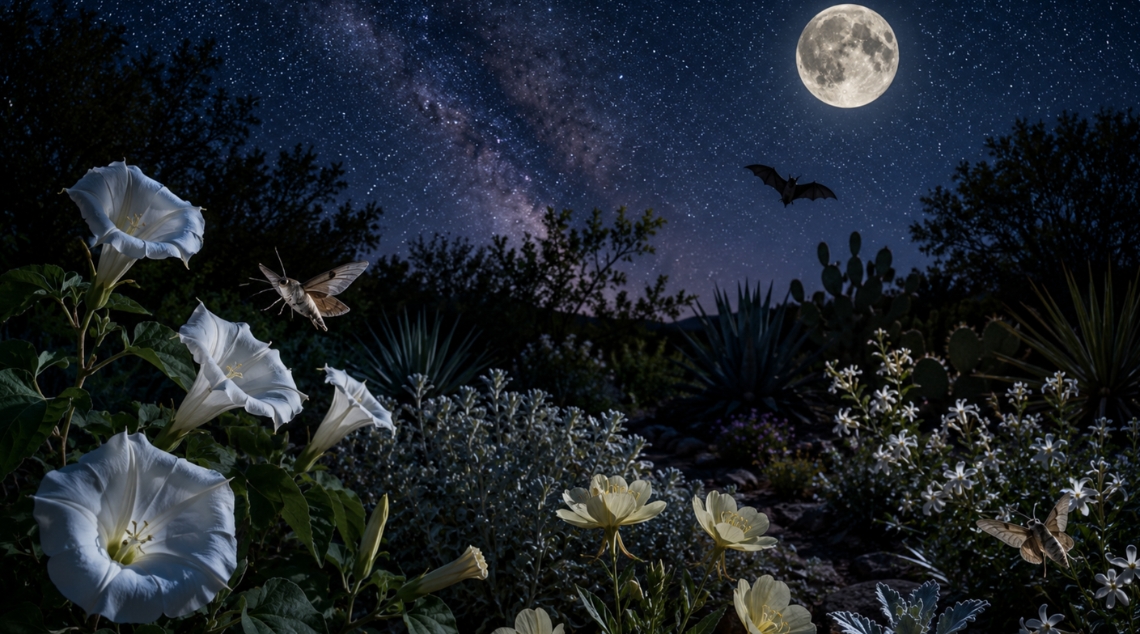
Most gardens are built for daylight: colorful blooms for morning walks, tidy beds admired over afternoon coffee. But when the sun sets, an entirely different world comes alive. Moths drift between pale flowers, bats swoop through the dark, and fragrant blossoms open wide for the night shift. The question is: Is your garden ready for them?
Moon gardens are intentionally designed for life after dark. With the right plants, thoughtful design, and minimal artificial light, these spaces become thriving habitats while providing a deeply peaceful place to unwind under the stars.
What Is a Moon Garden?
A moon garden is designed to be experienced at dusk and through the night. It features white or pale-colored flowers, silver-toned foliage, and plants that release their strongest fragrance after sunset. The idea is simple and elegant: instead of flooding your yard with outdoor lighting, nocturnal gardens rely on the moon to do the work, supporting life after dark. Light-colored blooms naturally reflect moonlight, making the garden glow without a single watt of electricity.
Why Nocturnal Ecosystems Matter
Nighttime pollinators are the unsung heroes of our ecosystems. Moths and hawkmoths are remarkably efficient pollinators, as the fine “hair” covering their bodies collects and carries large amounts of pollen from plant to plant. Bats can fly far greater distances than most insects, distributing pollen across much wider areas. Beetles, fireflies, and even nocturnal bees all play important roles after dark.
These species are active precisely when most of us have gone inside, and they are increasingly at risk. Habitat loss and light pollution have quietly eroded the nighttime world many of us never knew existed.
How Artificial Light Disrupts the Night
Excessive outdoor lighting is one of the most overlooked forms of environmental disruption. Bright light disorients insects, interfering with their ability to gather food, find mates, and evade predators. Even pulling down window shades at night can help nocturnal visitors make fuller use of your garden. The key insight: darkness is not empty, but full of life. The night has its own ecology, and that ecology depends on the dark.
What Makes a Good Moon Garden?
A moon garden’s main goal is to attract nocturnal pollinators. For this, we need three main elements.
Night-Blooming Plants
Choose plants that open or intensify after sunset. Common favorites that will grow well in Texas include:
- Moonflower (Ipomoea alba), which produces large, luminous white blooms that unfurl at dusk and close by morning
- Evening primrose (Oenothera), which is loved by sphinx moths
- Four o’clocks (Mirabilis jalapa) open in late afternoon and bloom all evening in vibrant pinks, whites, and bicolors.
- Night-blooming jasmine (Cestrum nocturnum) fills the air with an intense sweet fragrance that can become almost overwhelming after dark.
Pale and Reflective Colors
White and cream flowers are your best allies. To maximize the moonlight effect, try clustering flowers of the same shade of white together. Mixing bright white with creamy white can make the subtler blooms look dull by comparison.
Fragrance at Night
Many nocturnal pollinators rely on scent far more than sight. Night-blooming plants, such as jasmine, release stronger fragrance after sunset and will attract moths and other nighttime visitors.
Minimal, Responsible Lighting
Even if your garden needs some lighting, you can minimize the disruption. Use warm, amber-toned lights, and keep them shielded. If you can, add timers or motion sensors to control them.
Avoid bright floodlights and blue-rich LEDs, which are most disruptive to wildlife.
Designing a Moon Garden in Texas
Texas is an ideal setting for nocturnal gardening. Our hot summers make the evening hours the most pleasant time to be outside, and the state’s native plant diversity offers excellent options.
For a native Texas moon garden, consider Texas Kidneywood, with its upright, fragrant blooms; Showy Evening Primrose, with broad, pale petals; and Sweet Four O’Clock, a native with small white blossoms perfect for attracting moths. Frogfruit makes a wonderful, low-growing ground cover that is loved by pollinators. Finally, add low-maintenance dramatic silhouettes with local shrubs, such as Texas sage (Leucophyllum frutescens), agave, or yucca. The latter will also provide some food for moths and bats!
Simple Ways to Start
You don’t need a full landscape overhaul. Start with a patio corner, a single flower bed, or a seating area near the back door.
Next, add a small water feature to attract insects and the bats that feed on them. Consider adding a bat house nearby. Then take one more step: turn off or dim unnecessary outdoor lights. That small act of darkness is one of the most meaningful things you can do for the local ecosystem.
The Bigger Picture: The Night Is Alive
The dark outside your window is not empty or wasted. It is full of movement, fragrance, and purpose. A moon garden is an invitation to reconnect with that hidden world, to sit in the scented dark, and listen to the night doing its work. Every darker garden helps restore the nighttime habitat that light pollution has slowly taken away.
Ready to get started?
Texan nights are bustling with life. After dark, an entirely new set of pollinators, movements, and natural rhythms emerge. With a new garden, your family can start reconnecting with this hidden world.
With each new garden, we will reverse the damage that Artificial Light at Night has caused to our ecosystem. Start by:
- Auditing your outdoor lighting, removing or shielding what isn’t essential
- Planting one or two night-blooming natives this season
- Reducing or eliminating unnecessary landscape lighting around garden beds
- Supporting dark sky initiatives in your Texas community