
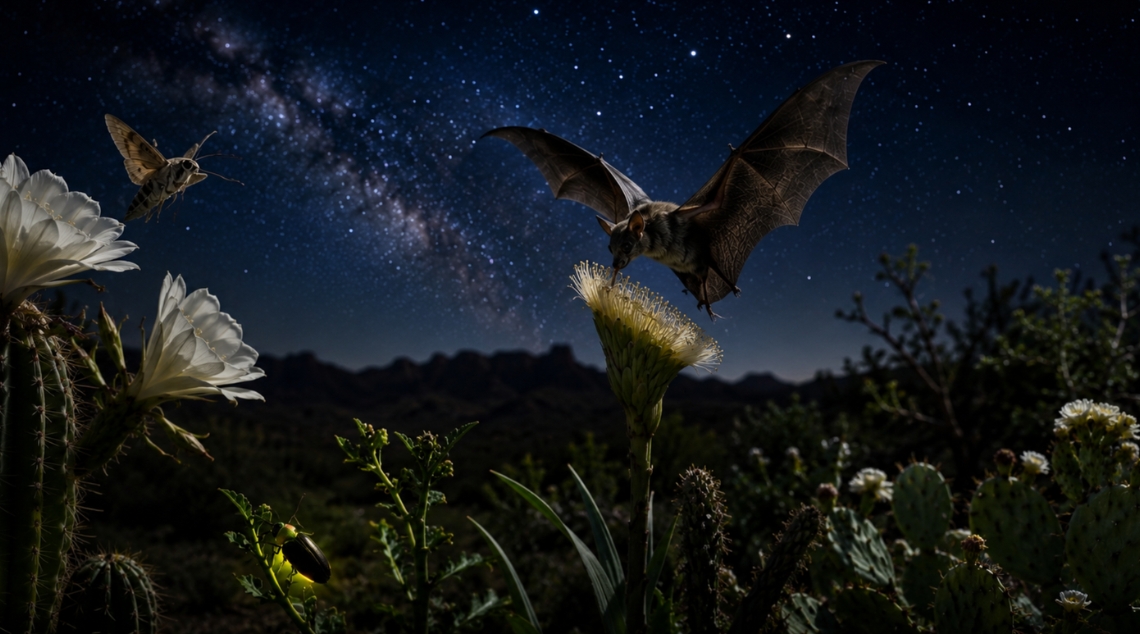
When most of us think of pollinators, we picture bees buzzing through a sunny garden or butterflies drifting from bloom to bloom. But there’s another crew out there that has been quietly keeping ecosystems alive for millions of years. The catch? They only come out after the sun sets.
Moths, bats, beetles, and night-active flies are the unsung heroes of night pollination, and without them, entire plant communities and the food webs they support would begin to unravel.
What Are Nocturnal Pollinators?
Nocturnal pollinators are species that are active at dusk, through the night, or in the early hours before dawn. Many plants have evolved specifically for nighttime pollination: they bloom only after dark, emit their strongest fragrances at night, and often produce white or pale flowers that reflect moonlight.
Common nocturnal pollinators include hawk moths, sphinx moths, nectar-feeding bats, certain beetles, such as fireflies, and night-active flies. Each of them fills a niche in nighttime ecosystems that day pollinators simply cannot.
Why They Matter
The impact of nocturnal pollinators can be felt across the ecosystem:
They support plant reproduction
Many species rely on night pollinators to bear fruit, including some crops we eat every day. Worldwide, over 500 plant species rely on bats alone to pollinate their flowers, including mango, banana, guava, and agave.
They maintain biodiversity
By pollinating native plants, night pollinators support food chains from the ground up. The seeds and fruits they help produce serve as food for birds, reptiles, and mammals.
They boost agriculture and food systems
Daytime and nighttime pollinators don’t compete; they work together. A healthy pollination network depends on both shifts. And when it comes to feeding the world, nocturnal pollinators have as big an impact as sun-loving ones, especially for legume crops like beans.
The Most Overlooked Pollinator: Moths
Of all nocturnal pollinators, moths may be the most misunderstood. There are roughly 11,000 species of moths in the United States alone. Their fuzzy bodies carry copious amounts of pollen from flower to flower, making them highly effective pollinators.
Some moth-plant relationships are extraordinarily specific. The yucca moth, for example, is the sole pollinator of the yucca plant. Without one, the other cannot survive. These moth pollinators actively work to transfer pollen. Ultimately, they are as irreplaceable as bees for our ecosystem.
How Artificial Light at Night Disrupts the Night Shift
Artificial light at night (ALAN) poses one of the most direct threats to nocturnal pollinators.
Moths evolved to navigate by moonlight and seek out pale flowers that reflect that soft glow. Bright outdoor lighting overwhelms these instincts, pulling moths away from plants and causing them to circle light sources rather than feed or mate. It also makes them far more visible to predators. The result: less pollination, less plant reproduction, and population decline.
The effects then weaken the entire ecosystem, leaving us with fewer food sources for the birds and bats that depend on those plants and insects.
Why Blue-Rich LEDs Are Especially Harmful at Night
Not all night lights are equal. Although trendy, cool-white LED fixtures emit short-wavelength blue light that is particularly attractive to insects and especially disruptive to their biological rhythms. This has intensified the impact on local moths and bats.
By contrast, warm amber lighting with longer wavelengths is far less disruptive to nocturnal wildlife. Choosing the right color temperature in your outdoor lighting is one of the simplest, most impactful changes you can make.
Signs Your Outdoor Lighting May Be Causing Harm
But is your yard part of the problem? Here are some common setups that can quietly work against nocturnal pollinators every night:
- Bright porch or entry lights left on from dusk to dawn
- Landscape or garden lighting positioned near or aimed at flowering plants
- Unshielded floodlights that cast light broadly in all directions
- Cool-white LED bulbs (look for a color temperature of 4000K or higher on the package)
- Decorative string lights or accent lighting in garden beds
How to Protect Nocturnal Pollinators
Small adjustments to your outdoor lighting can make a real difference for biodiversity. Consider these steps:
- Switch to warm amber LEDs (2700K or lower) instead of cool-white fixtures.
- Install timers or motion sensors so lights aren’t on all night.
- Shield outdoor fixtures so light points down, not outward.
- Avoid lighting flowering plants directly.
- Turn off unnecessary porch and landscape lights overnight.
Creating Pollinator-Friendly Night Gardens
If you have the space and time to take a more active role in protecting night-time pollinators, why not create a haven for them?
A moon garden can provide them with a small home where they can thrive. Plant night-blooming flowers like angel’s trumpets and night-blooming jasmine, along with fragrant plants and pale blooms like white cosmos and yarrow. Keep lights minimal and add a little leaf litter for overwintering caterpillars, and transform your outdoor space into a genuine nighttime habitat.
Why This Matters in Texas
Texas is home to extraordinary biodiversity, including critical bat populations and migratory moth species that travel through the state each year. Rapid development and increasing light pollution across Texas directly threaten these migratory routes and the pollinator conservation work that depends on functioning dark corridors.
The Bigger Picture
Light pollution isn’t just about losing sight of the stars. It changes what happens in living systems every single night. Darkness itself is a habitat. Every light left burning through the night has the potential to disorient a moth mid-flight, interrupt a bat’s feeding run, or silence a wildflower’s one chance of pollination.
The good news is that responsible lighting choices, pollinator-friendly gardens, and support for dark sky initiatives can genuinely help. Audit your outdoor lighting, replace your white LEDs with warmer, cozier options, or plant a night garden. More importantly, share what you’ve learned about nocturnal pollinators with your neighbors!