
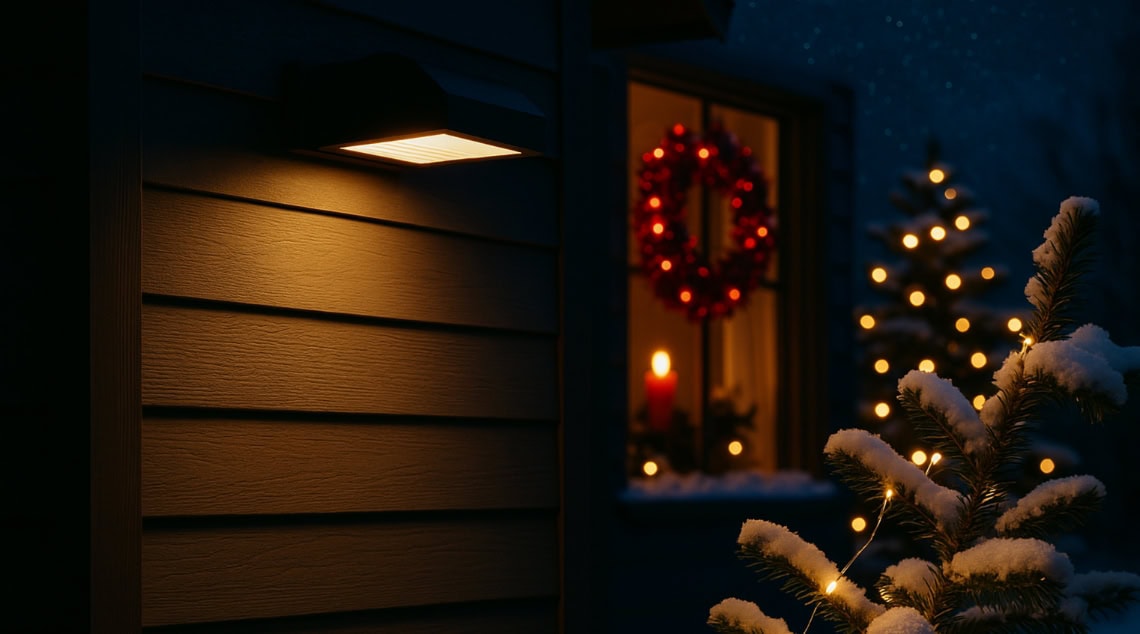
Every holiday season, Texas nights come alive with twinkling lights, festive decorations, and joyful gatherings under our vast skies. The downside is that many cherished lighting traditions unintentionally contribute to light pollution, which washes out the starry canopy that makes Texas nights so magical.
The good news is you don’t have to choose between holiday cheer and dark skies. With thoughtful lighting choices, you can create stunning seasonal displays that celebrate the spirit of the season while preserving the natural beauty of our Texas night sky for everyone to enjoy.
What Is “Dark Sky Friendly” Lighting?
When we talk about “Dark Sky Friendly” lights, we mean any installation that follows the 5 principles for responsible outdoor lighting. These guidelines were developed by DarkSky International and the Illuminating Engineering Society. These guidelines call for any outdoor light to be:
- Useful, or lit only when needed
- Targeted, directing light downward where needed
- Low Level, only as bright as needed
- Controlled with timers and sensors
- Warm-Colored, limiting blue-violet wavelengths
Once you keep these principles in mind, it is easy to bring a festive glow to your home and garden without creating glare on a neighbouring property or disrupting wildlife.
Often, all it takes is directing your light in a certain way, shielding it, and installing a way to control it.
Common Holiday Lighting Mistakes That Harm the Night Sky
Many well-intentioned holiday displays inadvertently create light pollution.
One of the most common examples? Unshielded floodlights and uplights that illuminate home facades, but also send light directly into the sky. This contributes to glare and sky glow that obscures stars.
This often results from string lights aimed horizontally. They can easily trespass into neighbors’ windows, disrupting sleep patterns and privacy.
But perhaps the most problematic (and costly) mistake is leaving decorative displays turned on all night. This can be especially disruptive for plants and wildlife but also for those who enjoy the natural ambiance of the night and viewing the night sky. This is especially important for rural communities that rely on astrotourism as a source of revenue and cultural connection.
The choice of bulb color matters too. Bright white and blue LEDs, while energy-efficient, emit short-wavelength light that scatters more in the atmosphere and disrupts both human and animal circadian rhythms. These cool-toned lights can interfere with melatonin production, making restful sleep more difficult for you and your neighbors.
We must also consider the impact on wildlife. Birds and insects alike pay a steep price for our festive traditions. Holiday lighting can be strong enough to disorient migrating birds, who need to see the stars to flee winter in time.
For small mammals, extra lights can be just as dangerous, driving them towards highways or the claws of predators. Researchers from Texas A&M University-Kingsville found that squirrel deaths increase up to sevenfold during the holiday season. With more artificial lights, squirrels forage later into the night, exposing them to nocturnal predators.
Baby sea turtles, moths, and countless other creatures struggle to navigate when artificial light overwhelms natural darkness.
Dark Sky Friendly Holiday Tips
Transforming your holiday display into a dark sky-friendly celebration is easier than you think.
Start by choosing warm-colored lights. Amber, red, and orange tones all create a cozy holiday atmosphere while producing less short-wavelength (blue-white) light that disrupts wildlife and human sleep. These warmer tones actually enhance visibility by reducing glare and harsh shadows. Coordinate your other decorations with them for a warm effect on the darkest nights of the year.
Shield your decorative lights to prevent light from spilling beyond your intended display. Use fixtures with top shields or place lights behind screens. Instead of illuminating your entire property, create focused window displays, and close curtains at bedtime to contain indoor light. This will also make them stand out more and invite guests and family to gather and be jolly. Consider wrapping trees and bushes minimally or leaving them as dark refuges for nocturnal visitors like possums, owls, and bats. If you’re unsure what kind of shielding you need, our Texas Light Shield Calculator can help you make the right choice for your setup.
Install timers and motion sensors to ensure lights shine only during early evening hours when you’re awake to enjoy them. Set displays to turn off by bedtime. This helps ensure lights are only on during peak hours and also cuts electricity costs. A master outlet with a timer makes it effortless to control multiple decorations.
Keep lighting targeted and low-level. Use short, covered solar lamps along walkways rather than tall fixtures. When spotlights are necessary, angle them downward and use shields to prevent upward light spill. Remember: Holiday lights should look festive, not flood your entire yard like a stadium.
Finally, explore creative alternatives to traditional electric displays. Daytime decorations like red bows, wreaths, and native plants like Texas bottlebrush create festive cheer without causing light pollution. Battery-operated candles in windows, reflective ornaments that catch daylight, and thoughtfully placed indoor displays can be just as magical while respecting the night sky and reducing glare and light trespass.
Why Invest in Dark Sky Friendly Holiday Lighting
Adopting dark sky-friendly practices during the holidays delivers rewards beyond environmental stewardship:
- You’ll preserve views of stars, planets, and the Milky Way that make Texas nights spectacular.
- Your neighbors will appreciate reduced light trespass and glare streaming into their homes.
- Your electricity bills will be lower, as LED lights with timers can reduce holiday lighting costs by up to 90%.
- You’ll protect local wildlife and plants, which will remain undisturbed in preserved darkness.
Perhaps best of all, warm-toned, thoughtfully placed lighting creates an intimate and cozy ambiance that feels magical compared to harsh, bright displays.
Communities across the state are already taking steps to reduce unnecessary lighting and protect the night sky. In fact, several Texas communities have been recognized for their proactive efforts to combat light pollution, a reminder that even local decisions can create statewide change.
So What’s Next?
This holiday season, join fellow Texans in protecting our incredible night skies. Take the DarkSky Texas Pledge to commit to responsible lighting practices year-round. Share photos of your dark-sky-friendly holiday display on social media and inspire your friends, neighbors, and homeowner associations to follow suit.
And since collective action creates the greatest impact, consider researching how to formalize lighting guidelines in your community. Together, we can turn responsible lighting into a holiday tradition that truly lights the way forward.
Ready to help protect the night sky? Take the DarkSky Texas Pledge, join our mission, or volunteer with us today.