
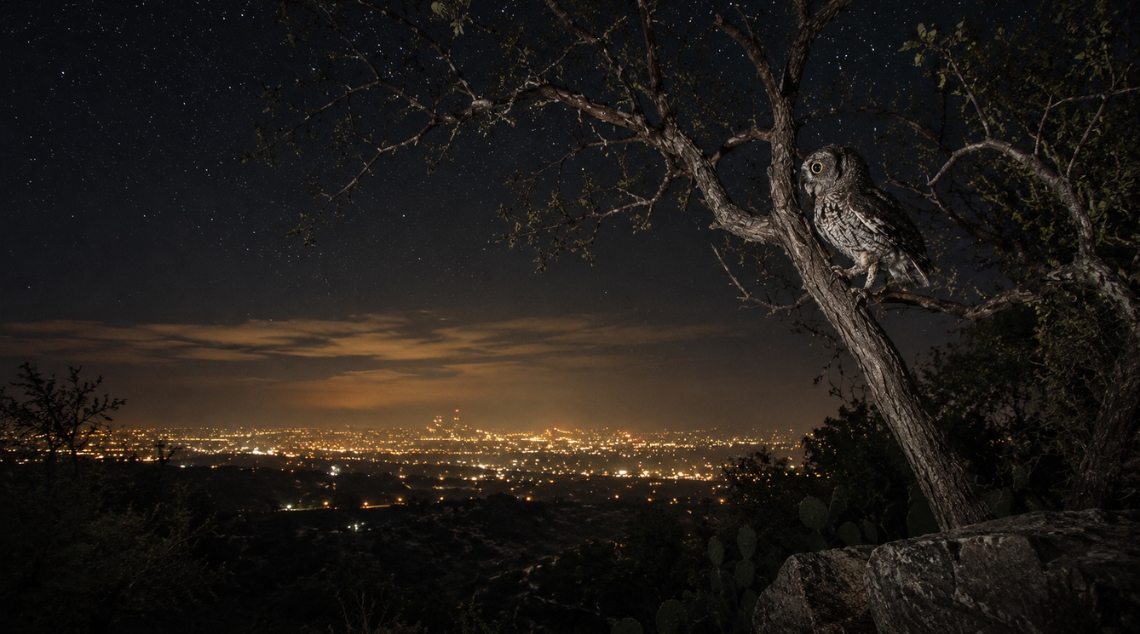
Most of us think of light pollution as a nuisance for astronomers and stargazers, or a shame for city dwellers who never see the Milky Way.
But the real story runs much deeper: when we flood the night with artificial light, we also disrupt entire ecosystems that have evolved over billions of years. Ultimately, darkness is part of nature.
For life on Earth, the rhythm of day and night is written into DNA itself, as it governs reproduction, migration patterns, feeding, and communication. When artificial light at night erases that rhythm, animal behavior changes, and plant cycles shift. This weakens the local ecological balance in ways that we are only beginning to understand.
What Is Night Ecology?
Night ecology is the living network of plants, animals, and environmental processes that come alive after dark. Nocturnal ecosystems are remarkably specialized, encompassing nighttime pollination, hunting, migration, reproduction, and feeding patterns that are every bit as intricate as those in daylight.
How Artificial Light Disrupts Ecosystems
Darkness is not empty. It provides shelter, navigation, camouflage, and reproductive signals for countless species. So what happens when it’s gone?
Disrupted Feeding
Predators rely on darkness to hunt; prey rely on it as cover. Artificial light tilts this balance in unpredictable ways, changing hunting success, escape patterns, and feeding schedules across the food web.
Bats, for example, tend to avoid brightly lit areas, forgoing insects that gather near lights instead of plants. Those insects, pulled away from flowers, contribute far less to nighttime pollination.
Pollination Gets Disrupted
Moths and other nocturnal insects are critical pollinators, but artificial light disorients them and draws them away from the plants they would otherwise visit. The result is reduced plant reproduction. This sets off a quiet cascade that touches everything from wildflower meadows to agricultural crops.
Migration Goes Astray
Birds that migrate or hunt at night navigate by moonlight and starlight. Artificial light causes disorientation, collisions with illuminated buildings, and exhaustion. Every year, millions of birds die this way. Light pollution can also shift their seasonal timing, causing them to migrate too early or too late and miss ideal conditions for nesting and foraging.
Reproduction and Behavior Change
Light alters mating behavior, nesting, and communication across many species.
For example, artificial lights disrupt the nighttime croaking of frogs, which is central to their breeding ritual. With each generation, the frog population gets a bit smaller.
Meanwhile, sea turtle hatchlings, which instinctively move toward the brighter horizon of the open ocean, are instead drawn toward artificial lights on shore. In Florida alone, millions of hatchlings die this way every year.
The Plant Kingdom Is Not Immune
Plants also use darkness as biological information. Many plant species evolved around predictable cycles of light and dark. The length of each day determines when they shed their leaves, flower, or enter dormancy.
However, ALAN (Artificial Light at Night) can disrupt this process. This can leave plants unprepared for frost or a dry spell, rendering them unable to survive the winter.
The flowering process can also be deeply affected. Many plants flower when they sense nights reach a certain length. Floodlights and glare can delay blooming altogether or reduce seed production.
The Ripple Effect Across Ecosystems
Light pollution is not an isolated problem. Every disrupted species affects many others. Declining insect populations reduce the food available to birds and bats. Fewer pollinators mean less plant reproduction. Less plant diversity weakens habitat for everything else. As researcher Christopher Kyba has noted, the introduction of artificial light may represent one of the most drastic changes humans have made to the environment for nocturnal species.
Why LEDs Make It Worse
Blue-rich white LEDs are now the standard for streetlights and home lighting across the United States. But while powerful, they also scatter more light through the atmosphere and have a deeper impact on circadian rhythms.
White-blue lights also attract insects more intensely than older yellow bulbs. Warmer amber lighting is significantly less disruptive to wildlife and should be preferred wherever lighting is necessary.
What Night Ecology Looks Like in Texas
Texas hosts an extraordinary range of nocturnal biodiversity.
Our local ecosystem includes migratory birds following ancient flyways, bat colonies that consume millions of insects nightly, nocturnal insects, amphibians, and desert and prairie wildlife that depend on darkness to survive.
As Texas cities grow rapidly and push light farther into wild landscapes, the pressure on these species intensifies. Protecting Texan night skies means protecting the wildlife that depends on it.
What You Can Do To Help?
Small changes at home add up to real wildlife conservation:
- Turn off unnecessary outdoor lighting
- Switch to warm amber color temperatures (2700K or lower)
- Shield fixtures so light points down, not sideways or up
- Install timers and motion sensors
- Use native plants and moon gardens to support pollinators at night
- Support dark sky initiatives and responsible lighting policies in Texas
Creating Wildlife-Friendly Outdoor Spaces
Small tweaks can help us make our homes less disruptive to natural habitats. But why stay there? With some ingenuity, goodwill, and space, you can also create a small habitat of your own.
Moon gardens, populated with native species, are now gaining traction as a sustainable landscaping option. Simply reserve a spot in your yard for native plants that flower at night – especially those with white flowers, which reflect moonlight better. Flowers like jasmine or evening primrose, combined with minimal pathway lighting, can protect nighttime pollinators around your home.
The Bigger Picture
The night is alive with activity most people never see. Pollinators visiting flowers, birds navigating by stars, amphibians calling to mates, hatchlings finding their way to sea. Darkness is a natural resource, and healthy biodiversity depends on healthy nights.
But you can take action against light pollution! Audit your outdoor lighting, reduce unnecessary brightness, and spread the word. The environmental impact of light pollution is real, but so is our power to reduce it.