
Step outside on a clear night and you’ll see an endless sea of stars. However, you may not be able to see as many stars as your grandparents did.
Brighter city lights have dimmed the night sky, which is not only disheartening for those who turn to stargazing as a form of connection and conservation but also deeply troubling for wildlife.
Light pollution, including forms such as invasive lighting also known as light trespass, occurs when we use excessive artificial light or when lights aren’t properly managed. The glow that spreads across the sky disrupts natural cycles of day and night, confusing animals that depend on darkness.
And Texas? With its booming cities, expanding suburbs, and brightly lit industrial sites, it’s a hotspot for invasive lighting.
So what happens when the night never really gets dark?
The state’s wildlife is already feeling the impact.
1. Bird Migration Patterns Get Disrupted
Each spring and fall, Texas skies turn into a busy highway. Millions of migratory birds pass through the Central Flyway over Texas, one of the most important bird routes in the world.
Typically, birds use the moon and stars to navigate. But when they see the glow of lights on a building or tower, they are drawn in and can lose their way. Some circle lights until they collapse from exhaustion. Others collide with buildings, oil rigs, or cell towers. The majority of collisions with buildings are with short structures – residential and low level commercial buildings.
Songbirds like warblers and sparrows, and waterfowl like ducks and geese, are especially at risk. In fact, scientists estimate up to a billion birds die each year in the U.S. from building collisions. Texas is one of the worst places for these losses.
Light pollution also throws off migration timing. Birds may leave too soon or too late, missing key breeding and feeding windows. That’s a tough challenge for species already struggling with shrinking habitats.
2. Sea Turtle Nesting on the Gulf Coast is Harmed
On the Texas Gulf Coast, sea turtles return year after year to lay their eggs. The tiny hatchlings usually crawl toward the brightest horizon. For eons, that was the moonlit water.
But when hotels, streetlights, houses, or even skyglow lights up the beach, hatchlings get confused. Instead of heading for the waves, they crawl toward the lights, often ending up in parking lots or on roads and don’t survive.
Communities like South Padre Island have begun using “turtle-friendly” lights, which are shielded, low, and amber-colored. These efforts help, but more beachfront towns need to follow suit if Texas wants to keep its sea turtles safe.

3. Nocturnal Mammals don’t Know How to Behave
Texas is home to some of the most incredible bat populations. The Congress Avenue Bridge in Austin alone shelters more than a million Mexican free-tailed bats.
These bats rely on darkness to hunt their prey, primarily insects. Artificial lights can attract prey, making hunting easier in the short term. However, over time, it alters their feeding patterns and pushes them away from their typical habitats.
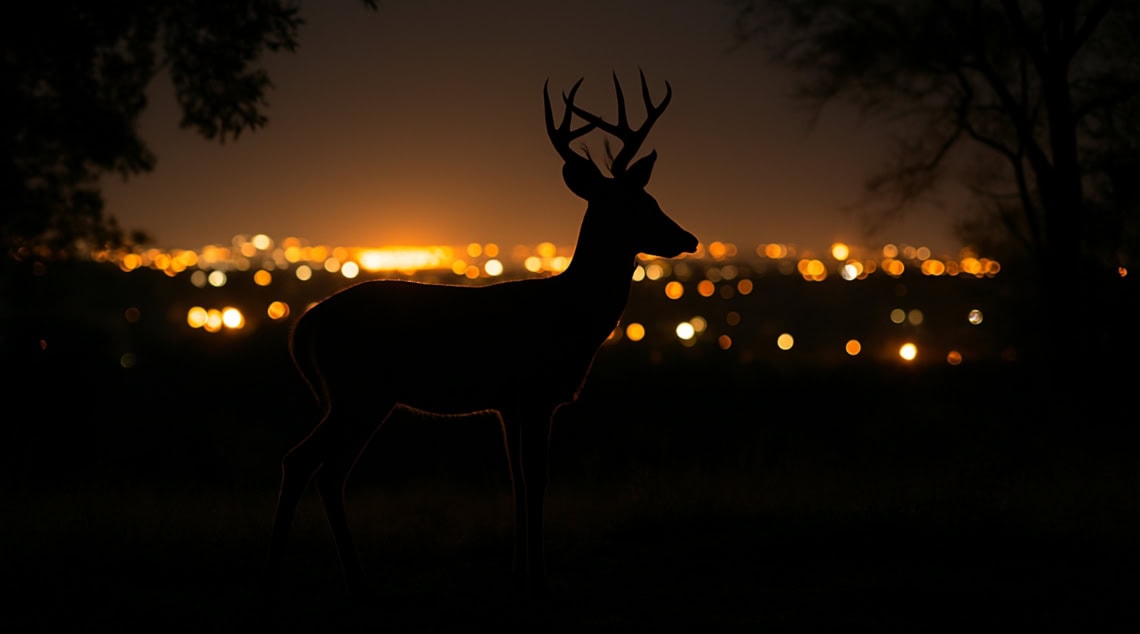
It’s not just bats. Deer, raccoons, and other nocturnal mammals adjust their behavior in response to artificial lights. Deer may avoid open fields near highways. Raccoons often take advantage of well-lit spaces, scavenging in neighborhoods instead of forests.
These changes affect the delicate predator-prey balance. They even influence how seeds are spread and how plants grow, reshaping ecosystems in unexpected ways.
4. Insect Ecosystems Become Unsustainable
Insects might be small, but they’re essential to life in Texas. And they’re among the hardest hit by light pollution.
Each of the 160 or so species of fireflies in North America has a unique blinking pattern used to attract a mate. Our lights keep them from finding each other, resulting in fewer and fewer fireflies.
Moths and beetles are naturally drawn to light sources. Instead of pollinating native plants, they circle streetlamps until they’re eaten or die of exhaustion.
The leaves on trees and shrubs exposed to our man-made lights at night get tougher and many insects avoid them. Our birds and other animals need those insects to survive. Lights on plants mean fewer insects are available.
All of these situations mean fewer pollinators for wild plants and crops. And fewer insects for the bats, birds, and amphibians that rely on them.
Scientists believe that light pollution is a hidden driver behind the global decline of insects. In Texas, where agriculture depends on healthy insect populations, the stakes are exceptionally high.
5. Amphibians Miss Their Reproduction Window
If you’ve ever spent time near a Texas creek or wetland at night, you’ve probably heard the chorus of frogs calling. Those calls are more than noise: it’s how they attract mates and bring forth the next generation.
But artificial light changes everything. Frogs may call less often or at the wrong times. Females may ignore them altogether. The result? Fewer successful matings.
Light also alters how frogs and salamanders behave. Some hide instead of foraging and become weaker. Others risk moving under bright lights, exposing themselves to predators.
How Can We Make a Difference?
The good news? We can fix this.
Across Texas, scientists and local communities, including those who’ve joined our movement or volunteered their time, are working on solutions. Bird-friendly building programs, turtle-safe lighting ordinances, and public awareness campaigns are making a difference. And homeowners can help too.
Simple guides, such as the five principles of responsible outdoor lighting, can help you reduce your personal impact. Small steps add up; even something as simple as taking the DarkSky Texas Pledge can be part of the larger solution.
The night sky is part of Texas’s natural heritage. Don’t you want future generations to experience it as it should be? Consider supporting these efforts and keeping Texas skies wild and dark.