
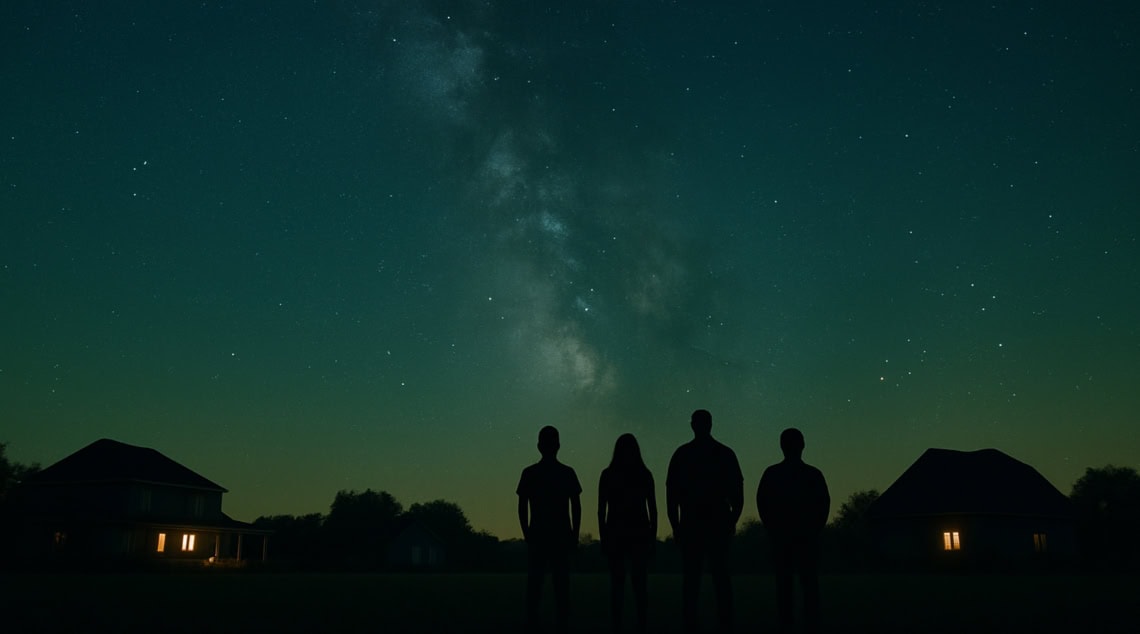
Across most urban areas around the world, what should be a tapestry of thousands of celestial points has been washed out by the orange glow of artificial light. From downtown Houston to Singapore, light pollution is a growing problem, with many areas now reaching “daytime color vision” levels of brightness.
But across Texas, something remarkable is happening. Communities are awakening to the unique grandeur of their natural night skies and fighting back against the encroaching glow. From small Hill Country towns to the halls of the State Capitol, Texans are proving that the stars at night can remain big and bright deep in the heart of Texas.
Mapping Light Pollution across Texas
Light pollution in Texas is at its heaviest in the Southeast, especially around the Houston-San Antonio-Dallas triangle. Other major cities, such as Amarillo and El Paso, have also created domes of brightness around themselves. Fortunately, many natural reserves and protected areas of Texas remain “dark night havens,” particularly in Central and West Texas.
To better understand the scope of the problem, DarkSky Texas recently started a database to document examples of invasive lighting across the state. Although still in its infancy, this database will help us map out both the extreme examples, as well as the cumulative effect of relatively “small” light spills on densely inhabited areas.
It All Starts with the Small Towns
The changing tide first stirred in the small towns of Central Texas, where the memory of dark, starry nights is still etched in living memories. These communities were among the first to organize and bring small, incremental changes to curb light pollution.
Dripping Springs: Pioneering the Movement
In 2014, Dripping Springs made history as the first city in Texas to be designated as an International Dark Sky Community, becoming only the sixth such community in the world. This Hill Country town has diligently maintained its unique distinction through the hard work and dedication of residents and businesses.
The stars remain visible and there is much less glare and light trespass thanks to their commitment to preserving what makes Dripping Springs “the best little city in Texas.” The community continues to serve as a beacon for other Texas towns, demonstrating that development and dark skies can coexist when proper lighting practices are implemented.
Dark Sky Communities: Tourism Meets Conservation
To achieve the designation of International Dark Sky Community, each town met rigorous requirements including a comprehensive lighting code, a community commitment to education, and successful light pollution control measures.
Each City monitors its sky, collecting data that provided to DarkSky International. They are also in the process of sharing the data with the new Sky Quality Meter (SQM) Dashboard within the DarkSky Texas website.
The efforts have paid off. The Dark Sky Community designation has boosted overnight tourism in the area, demonstrating that dark skies can be both environmentally and economically beneficial.
And Then It Reached the State Halls
The grassroots movement against light pollution reached a significant milestone on April 25, 2025, with the declaration of DarkSky Day at the Texas Capitol. As part of International Dark Sky Week celebrations, the event brought together volunteers, students, policy leaders, and community members from across Texas on the south steps of the Capitol.
Throughout the day, small groups of activists met with State Senators and representatives and discussed the impact of light pollution on safety, public health, wildlife habitats, and energy costs.
Their efforts culminated in a tangible victory: the Texas Senate passed an official resolution recognizing DarkSky Day at the Texas State Capitol. Then, Senator Cesar Blanco proudly presented the signed resolution, formally acknowledging the cause and showcasing growing legislative support for anti-light-pollution initiatives.
Is it Enough to Lead by Example?
Texas now boasts nine Dark Sky Communities, including Bee Cave, Blanco, Dripping Springs, Horseshoe Bay, Jonestown, Lakewood Village, Wimberley Valley, Fredericksburg, and Liberty Hill. However, as activists, we recognize that leading by example is sometimes not enough.
Enter the Better Outdoor Lighting Decisions (BOLD) Initiative, a new pillar of DarkSky Texas’ business plan that turns promises into action. The initiative partners with conservation-minded organizations, businesses, landholders, and governmental entities to minimize their contribution to light pollution, targeting approximately 35% of nighttime lights that serve no useful purpose.
The time for action is now. Join DarkSky Texas or make a donation to help this crucial movement gain momentum. Together, we can ensure that future generations will still be able to see the stars at night, big and bright, deep in the heart of Texas.