
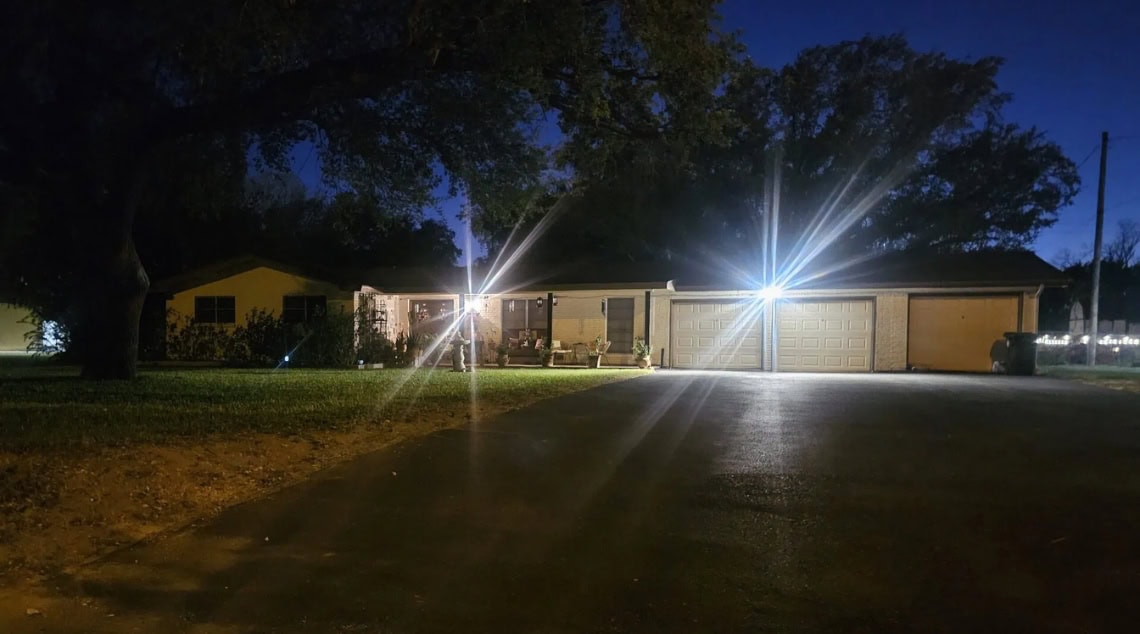
It’s 11:30 p.m., and you’re trying to fall asleep, but a harsh white light is shining straight through your bedroom window. Or maybe your backyard, once a peaceful place to unwind, now feels like a stadium because of the nearby floodlights.
If this sounds familiar, you’re not alone. Light trespass, or unwanted artificial light spilling onto your property, is a common issue in many neighborhoods. But while frustrating, it does not have to turn into a conflict. Here’s what you can actually do about it.
What Is Light Trespass?
Light trespass happens when outdoor lighting shines beyond the area it’s meant to illuminate, landing where it’s not needed or wanted.
It’s a widespread issue in residential areas across Texas and often happens unintentionally due to poorly aimed or overly bright fixtures.
Why It Matters More Than You Think
Light pollution at every scale, from homes to businesses, carries real consequences, including hidden costs for businesses. It can negatively impact:
Your Home & Comfort
Unwanted light at night can disrupt your sleep, which can affect your overall health. But even when it doesn’t land in your bedroom, it reduces your sense of privacy, makes it harder to enjoy your outdoor space, and even reduces the value of your property.
Wildlife & Environment
Artificial light at night affects other species, too. Stray lights that penetrate parks or nearby woods can disorient birds and draw insects away from their natural habitats. It disrupts entire ecosystems.
The Night Sky
Excessive lighting contributes to skyglow, washing out the stars and disconnecting us from the natural night environment, a problem that extends beyond homes and is also driven by sources like billboards and advertising lighting in Texas.
First Step: Start With a Simple Conversation
Approaching others with a complaint can feel awkward. The best way to get started is with a calm, friendly conversation.
A few tips:
- Remember, it’s likely your neighbor has no idea their light is causing a problem.
- Choose a good moment: avoid late-night complaints or rush-hour disruptions.
- Keep your tone polite and non-confrontational.
- Focus on how light affects you personally.
You might say something like:
“Hey, I wanted to mention that your light is coming into our window at night, and it has been hard to sleep. I was wondering if there might be a way to adjust it?”
Simple, respectful, and clear.
Show, Don’t Just Tell
Sometimes it’s hard to understand the impact without seeing it firsthand. If your neighbor is open to it, invite them to step inside your home at night or into your yard to see the issue from your perspective.
Some folks have hosted small neighborhood gatherings that happened to allow the owners of the light a view of their lights from your property. Others have taken photos or made short videos to help make the problem more tangible and easily understood by their neighbor.
Make It Easy for Them to Say Yes
The good news is that most light trespass problems have simple fixes. The challenge is that these fixes may not be immediately apparent if you have never considered light as a source of pollution.
It’s more effective to come equipped with a solution and frame it as easy improvements, rather than major inconveniences.
Here are a few options:
- Re-aim the light downward.
- Install a simple shield to block spillover.
- Switch to warmer, softer bulbs.
- Use motion sensors instead of leaving lights on all night.
- Reduce brightness levels.
These small adjustments can make a big difference for you, but without sacrificing your neighbor’s needs.
What If That Doesn’t Work?
If a friendly conversation doesn’t resolve the issue, try to stay calm and neutral. Escalation rarely helps.
Instead, consider:
- Reaching out to a homeowner’s association (if applicable)
- Checking local lighting ordinances
- Exploring community mediation services
- Add a photo of the offending lights to the DarkSky Texas Light Trespass database to aid in efforts to educate our elected officials about it
The Myth: More Light = More Safety
It’s a common belief that brighter lighting automatically means better security. But that’s not always true.
Studies now suggest excessive lighting does not reduce crime: over-lighting can create glare, which reduces visibility. Harsh lights can cast deep shadows, making it harder to see clearly, or even creating places for someone to hide.
So if more lights do not mean more safety, what does? The answer lies in good lighting design.
A Better Approach to Outdoor Lighting
Thoughtful lighting benefits everyone. Following DarkSky’s 5 principles for responsible outdoor lighting can help create spaces that are safer, more comfortable, and environmentally responsible.
That means:
- Lighting only what’s needed.
- Use warmer color temperatures
- Reducing glare with proper shielding
- Installing timers or motion sensors
Final Thoughts
Dealing with a neighbor’s bright lights can feel frustrating, but you’re not powerless. In many cases, a respectful conversation and a few simple changes can resolve the issue.
Everyone deserves a comfortable night – and it’s something we can achieve together!