
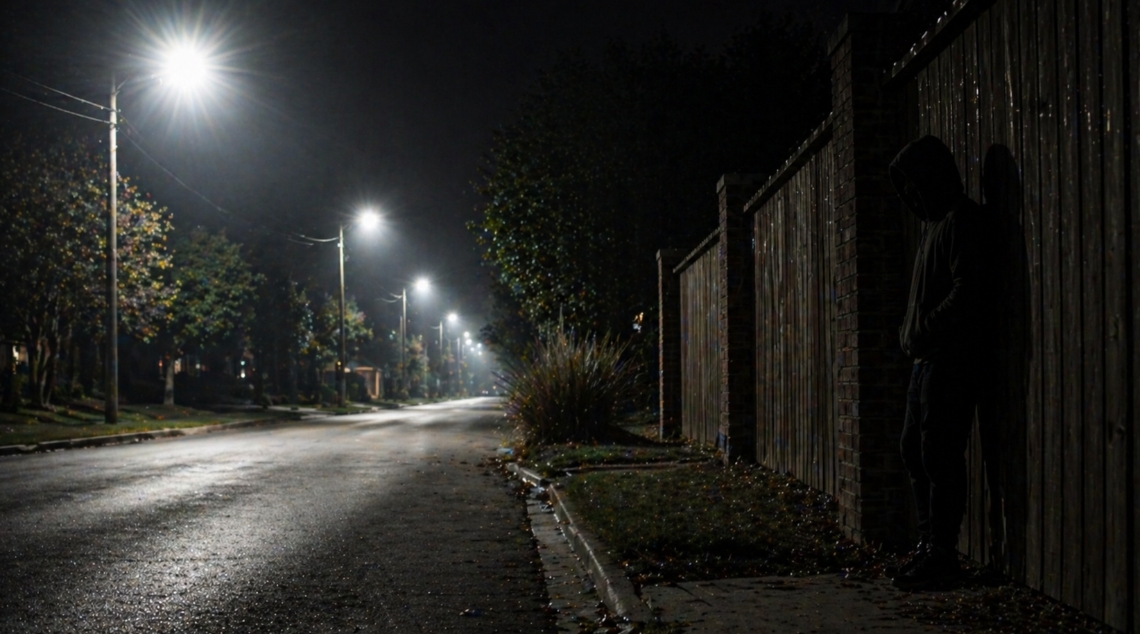
Picture this: you pull into a brightly lit parking lot, your neighbor’s floodlight washing across your bedroom window all night, or a streetlight hums outside your home from dusk to dawn. It feels safer, right?
For many of us, it is an automatic assumption: more light means less crime, less danger, more peace of mind. But what if that assumption is wrong?
This belief has shaped everything from home lighting to large-scale infrastructure, including sources like billboards and advertising lighting in Texas.
Why Do We Believe More Light = More Safety?
The logic is intuitive. Darkness hides threats, so light reveals them. If criminals can be seen, they’ll think twice before robbing a passerby. This idea is reinforced by marketing, outdated municipal policies, and decades of cultural habit: we leave lights on overnight “just in case”, we install floodlights as a first line of defense despite growing evidence around the hidden costs of light pollution for businesses and communities.
It feels proactive. But feeling safe and being safe are not the same thing.
What Research Actually Says
The relationship between lighting and safety has been studied for decades. The results often challenge our assumptions.
Lighting Alone Does Not Prevent Crime
A 2015 study published in the Journal of Epidemiology and Community Health examined data from 62 locations across England and Wales. Researchers found that lighting had no effect on road traffic collisions or crime, regardless of whether lights were fully on, dimmed, turned off at certain hours, or replaced with LEDs.
Meanwhile, another study in Melbourne, Australia, analyzed 80 “hotspots” deemed particularly unsafe for women. They found that bright, cool lighting was more likely to be perceived as unsafe.
The Chicago Alley Lighting Project
An experiment done in Chicago offers a striking real-world example. In 1998, the city upgraded alley lighting in a pilot neighborhood, increasing wattage from 90 to 250 watts. The result was clear: Reported crime in the lit area rose 21% compared with the prior year, while daytime crime actually decreased. The control area, which received no lighting upgrades, saw smaller increases. The likely explanation is that better lighting made criminal activity more visible. This led to more reports, but not necessarily to more crime. At the same time, it also showed that brighter lighting did not deter offenders.
The Health Side of It
Finally, there is also strong evidence that bright night lights pose an additional health hazard. The American Medical Association has warned that blue-rich LED streetlights suppress melatonin and disrupt sleep. Chronic sleep disruption is linked to increased risk for obesity, cardiovascular disease, and other long-term health problems. The safety impact of outdoor lighting is not just about crime.
The Hidden Problem: Glare and Overlighting
Here is a counterintuitive truth: too much light makes it harder to see. Unshielded floodlights and overly bright fixtures shine directly into your eyes, causing your pupils to constrict.
This creates harsh contrasts, with blinding brightness in one spot and deep, impenetrable shadow just beyond it. The American Medical Association has noted that glare from nighttime lighting can range from discomfort to outright visual disability. Meanwhile, the surrounding shadows create an opportunity for anyone who wishes to remain hidden.
Poor Lighting Design Creates a False Sense of Security
Blinding floodlights aimed across an area and upward rather than the ground, or fixtures that create glare and cast deep shadows nearby, are common results of poorly planned lighting strategies. Bad lighting design can create the illusion of safety while actually reducing it.
What Actually Improves Safety
The shift isn’t from more light to no light. It’s from more light to better light. Effective lighting is:
- Targeted and directed where it’s actually needed
- Shielded so light goes down, not into the eyes or the sky
- Warm in color temperature, especially when using amber lighting, which is easier on the eyes and less disorienting
- Motion-activated, bringing more attention to an unexpected presence
- Proportionate so it’s bright enough to see, but not so bright it blinds
These approaches align with practical strategies outlined in our dark sky home lighting tips.
Asking the Right Question
Instead of asking “Is there enough light?” we must dig deeper into the specifics:
Is the light useful? Is it aimed properly? Does it improve visibility, or just increase brightness? Does it create glare or reduce it?
These are the questions that lead to genuinely safer spaces.
The Bottom Line
More light does not automatically mean more safety. Science is clear on this. Thoughtful, well-designed lighting improves visibility, respects neighbors, protects nocturnal wildlife, and keeps our night skies dark. These simple principles can help us keep our night skies dark while still making our homes safer.
So how can you achieve this? Start by auditing your outdoor lights. Are all fixtures directed down? Does it spill into neighbors’ yards or the street?
Swap any fixtures that aren’t up to standard. Then, talk to your HOA and neighbors so they can do the same. Mobilize the community to support responsible lighting policies in your city or county. Better light is within reach, and it turns out, it’s safer too.
You can also join us in protecting Texas night skies and be part of the growing movement. If you believe in creating safer, healthier communities through better lighting, consider supporting this mission and donating to DarkSky Texas.