
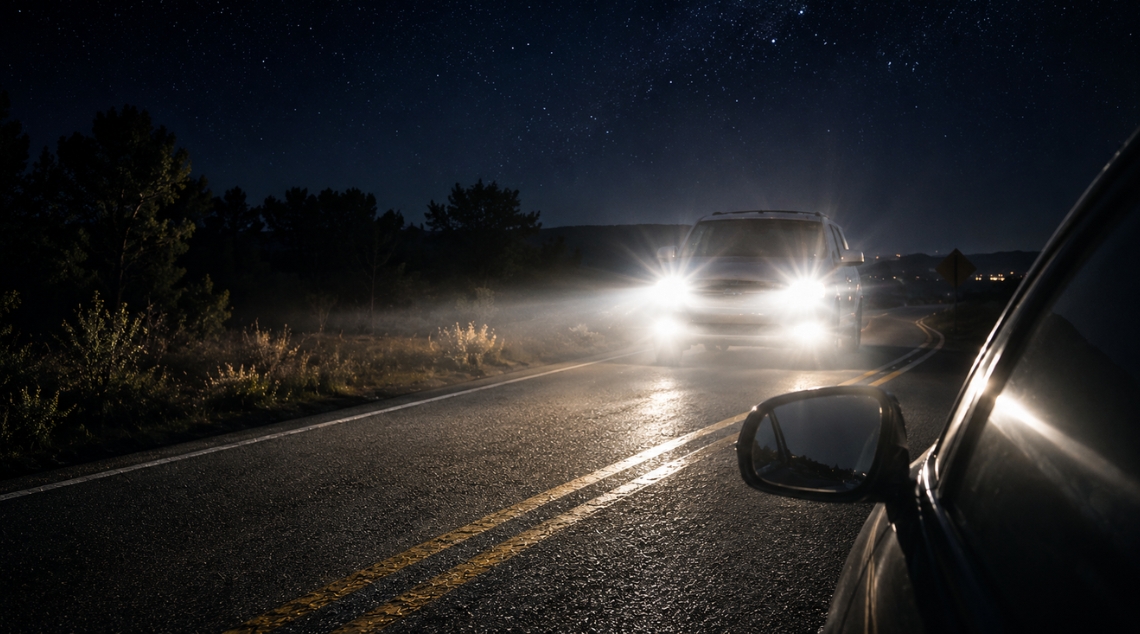
Maybe you’ve already been here: you’re driving home on a dark Texas highway when an oncoming SUV crests the hill, and suddenly you can’t see anything but white light, even though the other driver isn’t using their high beams. Minutes later, a pickup truck rides your bumper, and your rearview mirror turns into a spotlight.
Sound familiar? Complaints about headlight glare have been climbing across North America for years, and it raises a real question: are brighter headlights actually making our roads safer?
Why Headlights Feel Brighter Than Ever
The main driver behind this trend? Over the past decade, the automobile industry has shifted from halogen lamps to LED headlights. They’re cheaper, last longer, and throw out more light than the halogen bulbs they replaced.
However, that light skews blue-white rather than warm yellow. The human eye perceived these white lights as sharper and harsher. Add in the rise of SUVs and pickup trucks, which sit higher off the ground and aim their beams more directly into the sightlines of drivers in smaller cars, and the discomfort multiplies.
One analysis of nearly 300 car models built between 2016 and 2025 found that average headlight intensity rose by roughly 22% over that decade. This steady climb aligns with rising consumer complaints about nighttime accidents.
The Safety Argument
To be fair, automakers aren’t brightening headlights just to be annoying. However, research consistently shows that more light does not automatically mean more safety, especially when glare reduces visibility. The intended benefit is real, but to get the whole story, we need to look at the results.
The Growing Problem of Glare
When bright lights reduce visibility, we’re talking about glare. Intense, blue-rich beams cause eye strain, momentary blindness, and reduced contrast. Paradoxically, these lights make it harder to spot pedestrians and road hazards in the dark. For many drivers, night driving has gone from relaxing to genuinely stressful.
Light Pollution on Wheels
When they hear about “light pollution”, most people picture bright billboards or stadium lights. However, vehicle lighting is a major and often overlooked contributor: it is projected horizontally, travels long distances, and flashes on and off as cars pass. This pattern can disrupt natural darkness and disturb wildlife along road corridors.
By one estimate, the world had around 1.6 billion vehicles in 2025, compared to roughly 352 million streetlights. But unlike streetlights, headlights spill directly into oncoming eyes and nearby homes, creating temporary glare and contributing to light trespass experienced by nearby residents. Responsible lighting isn’t just a streetlight issue anymore; it applies to vehicle lighting too.
Why Current Headlights Aren’t the Only Option
Adaptive driving beam (ADB) technology offers a real fix. Modern LED headlights aren’t a single on/off bulb. Instead, they’re made of many individual light segments. When equipped with ADB sensors, the headlights can detect oncoming traffic and dim only the segments aimed at other drivers, leaving the rest of the road brightly and continuously lit.
ADB has been standard in Europe, Asia, and Canada for over a decade. U.S. adoption has lagged because of regulatory hurdles, though that’s beginning to change as a handful of automakers redesign their systems to meet stricter American standards.
A Better Solution: Lighting Designed for the Night
DarkSky International’s concept vehicle, DarkSky One, unveiled at the 2026 Detroit Auto Show, reframes the conversation entirely: darkness isn’t a problem to overcome, but something to design for.
The goal isn’t to reduce safety, but to design smarter lights that illuminate what drivers actually need to see while minimizing glare and unnecessary brightness. The DarkSky One was designed under the same responsible outdoor lighting principles that guide all our initiatives: that lights should always be useful, targeted, controlled, and warm-colored.
Lessons from Responsible Outdoor Lighting
Ultimately, more light doesn’t automatically mean more safety. Thoughtful design, with proper aiming, warmer color temperatures, and glare reduction, consistently outperforms simply cranking up the brightness.
What Drivers Can Do Today
Most of us need to plan ahead before buying a brand-new vehicle. However, you can still adjust the car you have to make it less disruptive. Consider the following:
– Keep headlights properly aligned
– Skip aftermarket ultra-bright bulbs
– Keep headlight lenses clean
– Dim high beams promptly for oncoming traffic
– Consider vehicles with adaptive lighting systems when shopping
– Share this information with your Congressional representatives, auto insurance company, and organizations to which you belong who might share this information with other members.
Looking Ahead
The technology to reduce glare already exists, and regulations are slowly catching up. Future vehicle lighting will likely need to balance safety, driver comfort, and environmental responsibility all at once.
We shouldn’t frame this debate as bright versus dark, but as bright versus smart. The best car headlights help us see without blinding everyone else on the road. Our roads, our communities, the local wildlife, and the Texan night sky all benefit when vehicle lighting is thoughtfully designed rather than just dialed up.
In the meantime, what can you do? Learn the principles of responsible outdoor lighting, share them with friends and neighbors, and even consider starting a dark sky movement in your community. Secure support for night-friendly solutions such as adaptive driving beam technology. You can also participate in Globe at Night to help document light pollution in your community and contribute valuable data for night sky conservation.