
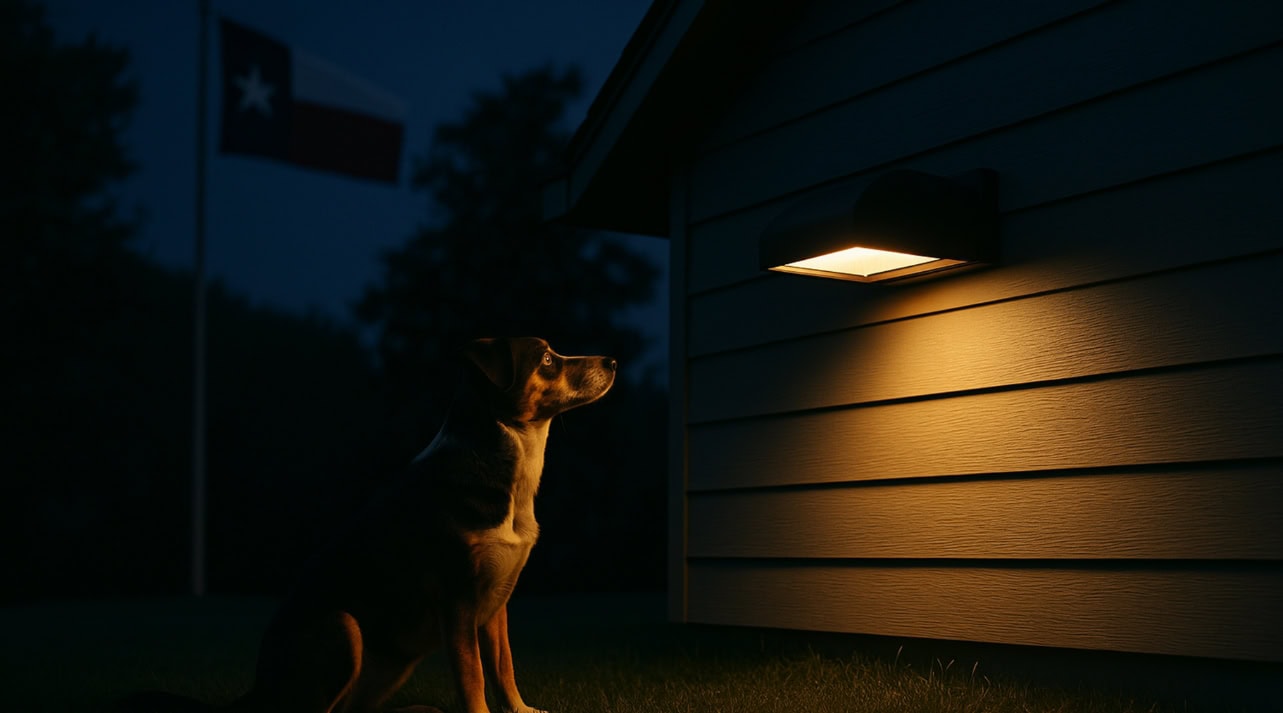
Why Talk About Light Pollution and Pets?
When we discuss light pollution, the conversation typically centers on stargazing, the impact on migrating birds, or the health effects on shift workers. But there’s a member of the family we often overlook: our dogs. Your pup shares your home and your schedule, which naturally includes your artificially lit environment. The same blue-tinged LED bulbs keeping you awake at 2 AM might also be messing with Fido’s sleep cycle.
Dogs aren’t just passive bystanders in our 24/7 illuminated world. They’re mammals with biological clocks like ours. Constant exposure to artificial light at night disrupts their natural rhythms in ways we’re only beginning to understand.
How Dogs Experience Light
Like humans, dogs operate on their internal circadian rhythm: an internal biological clock that regulates sleep-wake cycles, hormone production, and daily behaviors. For billions of years, life on Earth has relied on the predictable rhythm of day and night, and this cycle is encoded in the DNA of both plants and animals. Dogs depend on this pattern to know when it’s time to be alert and when to rest.
We can think of darkness as a biological signal. When darkness falls, your dog’s body begins producing melatonin, a hormone that promotes sleep and supports immune function. Melatonin also plays roles in reproduction, metabolism, and overall hormonal balance. However, artificial lighting often mimics the intensity of midday sunlight. This is especially true when dealing with blue-enriched light from light bulbs that appear white to humans or from LED screens.
To your dog’s brain, leaving lights on at night is like telling their body that it’s still time to be awake and active. The result? Their internal compass gets scrambled.
Adverse Effects of Artificial Light on Dogs
So what happens when your dog’s circadian rhythm goes haywire? The effects are more serious than you might think:
- Disrupted Sleep: Blue light suppresses melatonin production in dogs just as it does in humans. Too little melatonin leads to insomnia and restlessness, which may appear as pacing, whining, or being hyperactive at bedtime.
- Altered Activity Patterns: Constant light exposure disrupts natural patterns, causing dogs to be playful at midnight and sluggish during the day.
- Stress and Anxiety: Continuous bright light exposure causes restlessness and anxiety, particularly in sensitive breeds. A chronic inability to settle can lead to other health problems, such as hair loss, digestive issues, or incontinence.
- Hormonal Imbalances: Light pollution disrupts reproductive cycles and other hormone-dependent processes. While effects are better documented in cats, dogs share similar mammalian biology that responds to photoperiod cues.
- Blue Light’s Special Impact: Blue and white light sources are particularly harmful. Blue wavelengths suppress melatonin even more than yellow ones. Their effects will be felt for longer, even after the lights are turned off.
Broader Evidence from Animal Studies
Is this really a problem, or are we overthinking things?
Science is clear. Artificial light at night has harmful effects on amphibians, birds, mammals, insects, and plants. Wildlife studies reveal that artificial lighting causes disorientation, altered migration patterns, disrupted breeding cycles, and increased predation risks. Nocturnal foragers struggle to find food, while prey species lose the cover of darkness that protects them.
Global light pollution levels have been increasing annually, and research consistently shows that nocturnal animals relying on natural day-night cycles for sleep, feeding, and mating are particularly affected.
As mammals, humans are not immune to this. Studies on shift workers show that chronic circadian disruption leads to metabolic issues, mood disorders, and compromised immune function. The exact biological mechanisms that govern human health govern your dog’s well-being.
Even among pets, dogs aren’t alone. Cats, which are naturally more nocturnal, also suffer from artificial light exposure – and they’re notoriously sensitive to any disruptions to their routine or circadian cycle. Research shows that female cats’ reproductive cycles can be disrupted by artificial lighting. Meanwhile, both males and females can develop behavioral problems when their natural light-dark cycles are constantly interrupted. This can then result in unexplained aggression, excessive grooming, or litter box issues.
Practical Steps Pet Owners Can Take
The good news? You don’t need to live in darkness to help your dog. Small changes can make a big difference.
Dim the Lights at Night: Create a routine where household lighting gradually decreases in the evening. This mimics natural sunset conditions, helping to trigger melatonin production. Even dim light can suppress melatonin secretion, so it’s best to have a darker environment as bedtime approaches.
Use Warm Bulbs: Replace harsh blue and white LED bulbs with warmer, amber-toned options, especially in areas where your dog sleeps. Yellow and amber lights are significantly less disruptive to circadian rhythms compared to blue-enriched lighting.
Turn Off Unnecessary Lights: Try turning off remaining blue and white bulbs and bright white LEDs at least two hours before your dog’s bedtime. This gives their body time to naturally start producing melatonin.
Shield Outdoor Fixtures: If you use security or motion-sensor lights in your yard, ensure they’re shielded and pointed downward, rather than directed at windows or dog runs. Floodlights shining directly into kennels or sleeping areas can prevent outdoor dogs from getting the proper rest they need.
Establish Routines: Dogs thrive on consistency. Set regular “lights out” times and stick to them. Combine dimming lights with other bedtime cues, such as a special treat or calming words. Your dog may not understand your intentions, but they’ll understand the pattern.
Encourage Darkness Breaks: When safe, allow your dog outdoor time during natural low-light conditions, such as at dawn or dusk.
Create a Bedtime Ritual: Just like children benefit from bedtime routines, so do dogs. Combine reduced lighting with calming activities, such as taking a final bathroom break, gentle petting, and settling into their bed. These cues signal that it’s time to wind down.
Why This Matters for Texans
In Texas, outdoor security lighting is often excessive. Many homes use bright floodlights that stay on all night, whether the owner thinks it will deter intruders or to simply light up the backyard. While lights can make us feel safe although not actually reducing crime, these lights can unintentionally stress pets left outdoors overnight or sleeping near windows.
The solution isn’t to eliminate outdoor lighting entirely, but to use it more intelligently. The International Dark-Sky Association’s Five Principles of Responsible Outdoor Lighting provide a roadmap: use light only when useful, direct it only where needed, make it no brighter than necessary, minimize blue-white light emissions by using yellow and amber lighting, and turn it off when not in use.
Final Thoughts
Texas nights can be spectacular when we let them be lit by the moon and stars. By making smart adjustments to how we light our homes and yards, we’re creating healthier environments for our entire family, and potentially reducing the number of 3 AM wake-up calls.
You can help us change this by advocating for and educating the public. Adopt responsible outdoor lighting practices and share this information with your neighbors. Become a visible part of our movement through our Be A Star program. And if you can afford it, donate to help us spread these actions to more towns.
Learn more about how your contributions can help. Join us, take the pledge, or sign our volunteer interest form.