
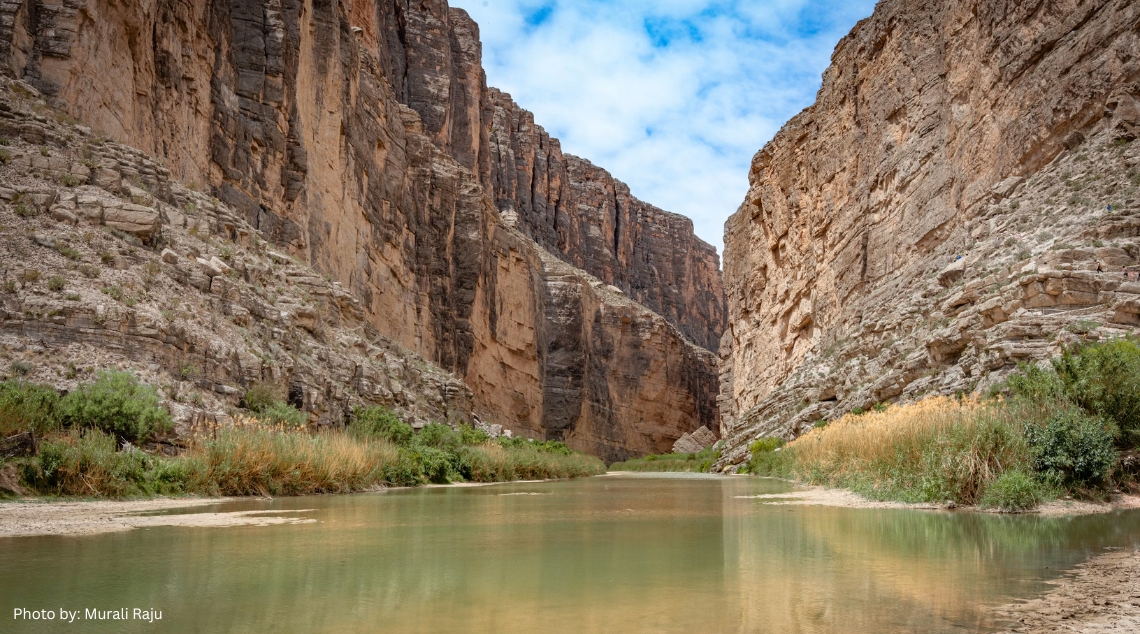
Texas is home to some of the darkest skies left in the United States. In some areas, nights are so clear that scientists, stargazers, and rural communities have built their lives around them. Wildlife and plants depend on them too.
New border wall construction now threatens to change that. But this isn’t about choosing between security and conservation. The real question is whether the security infrastructure can be built with lighting that doesn’t erase what makes our area extraordinary.
Why Border Lighting Matters
The new southern border infrastructure is coming with permanent lighting systems that run every night, regardless of activity.
These installations can wash out night skies, disorient wildlife, disturb nearby communities, and interfere with astronomical research.
Similar concerns have already surfaced in Arizona and New Mexico, where new border segments have been lit for months at a time.
What’s Happened Elsewhere
As one of the largest border states, neighboring Arizona was among the first to see the impact of light pollution near the border.
For example, near the Organ Pipe Cactus National Monument, new light poles are threatening a UNESCO biosphere reserve. This area, located right next to the US-Mexico border, houses a perennial spring-fed pool considered sacred by the Tohono O’odham people, as well as significant populations of Quitobaquito pupfish and Organ Pipe cacti.
The same issue is also affecting the San Bernardino National Wildlife Refuge, closer to the boundary with New Mexico. Here, similar floodlighting technology is “literally a flip of a switch away.” Conservation groups and scientists have raised alarms about the skyglow these systems create and their effect on nearby protected dark sky areas.
Why Texas is Different
Few places compare to West Texas. The Greater Big Bend International Dark Sky Reserve, established in 2022, spans more than nine million acres and over 15,000 miles of dark sky. It is the largest such reserve on Earth, and supports the McDonald Observatory’s search for distant galaxies, a rural tourism economy built on stargazing, and wildlife corridors for migratory birds, bats, and even jaguars.
The Big Bend area is not alone in needing protection from intrusive lighting. Much of the border between Texas and Mexico consists of low population areas with pre-historic art and established wildlife corridors that need to be protected from artificial light at night.
The Growing Concern in Texas
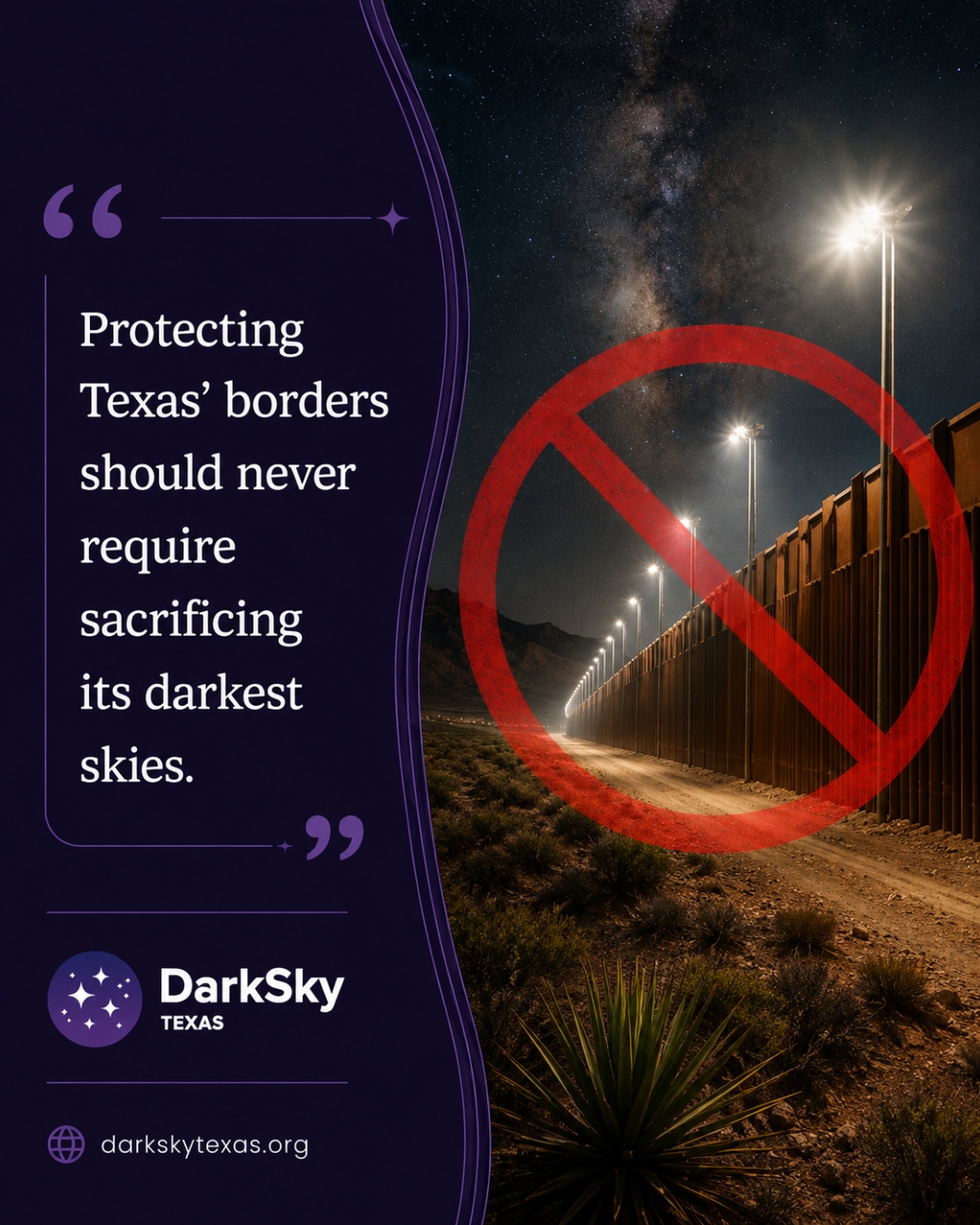
Currently, construction plans in the Big Bend Region include roughly 165 miles of wall, which will be further secured by a line of permanently lit stadium lights.
According to Stephen Hummel of the McDonald Observatory, the widespread illumination could degrade the observatory’s data collection and could jeopardize the projects they are currently working on.
At the same time, environmentalists and local authorities have their own reasons to worry. Local leader Amber Harrison also points out that the lights can disrupt local wildlife and could make the region lose its Dark Sky designation. In turn, this can also impact people’s livelihoods, as stargazing is one of the leading economic activities in the Big Bend region. “The impacts are potentially immediate,” she said.
Unfortunately, the issue is not limited to the wall lights themselves. Worker housing, road upgrades, and surveillance stations all bring light.
Environmental Law Concerns
Lighting deserves the same careful review as any other border infrastructure decision. Dark-sky-related laws have protected the Big Bend region since 1975, when regulations were first enacted to support astronomy at McDonald Observatory.
That history shows just how long darkness has been treated as a resource worth safeguarding. Large-scale infrastructure in a designated dark sky landscape should not move forward without first assessing its impact on the nighttime environment. That review, including lighting plans, should take place before construction begins, not after.
In places recognized for their exceptional night skies, darkness cannot be treated as an afterthought. Where development is unavoidable, lighting should meet the highest dark-sky standards and be planned in consultation with local communities, land managers, specialists knowledgeable in dark sky lighting, and Tribal partners.
A Rare Bipartisan Agreement
What’s striking about the pushback in Big Bend is who’s doing it. Residents across the political spectrum have united against unshielded wall lighting.
It’s clear that for this community, protecting dark skies isn’t a partisan issue. It touches public safety, conservation, scientific research, tourism, and quality of life for everyone in the region.
Security and Dark Skies Can Work Together
DarkSky Texas is not advocating for or against border security policy. Our position is simply that any policy should be carefully thought out and that naturally dark places should remain dark whenever possible. Major infrastructure projects, regardless of their purpose, should follow the Five Principles of Responsible Outdoor Lighting: useful, targeted, low-level, controlled, and warm-colored. These principles help reduce unnecessary light pollution while still allowing lighting to serve its intended purpose.
Applied to border infrastructure, that means light aimed only where it’s needed, dimmed or motion-activated rather than left on constantly, a very warm color, and shielded to keep the glow from spreading into the surrounding dark.
Well applied, this may even increase the effectiveness of border security. Ultimately, more light that is permanently on is not normally safer, especially when compared to the quick, startling effect of a motion-activated, targeted bulb.
The Tools that Already Exist
Shielded fixtures, motion-activated systems, and directional LEDs are already standard in dark-sky-friendly design elsewhere. U.S. Customs and Border Protection has even said it plans to rely on “other operationally superior methods,” like infrared illuminators, in some remote stretches. This is proof that smarter alternatives to blanket floodlighting are already on the table.
Why This Matters Beyond Astronomy
Artificial light disrupts migratory birds, bats, and other nocturnal pollinators that support the entire ecosystem.
Light can also carry for miles, which compounds the hidden ecological cost of light pollution: Terlingua residents can already see the glow from Presidio, nearly 50 miles away.
For the people who live here, darkness is also a cultural touchstone, part of a rural way of life that many came to Big Bend specifically to preserve.
The Bigger Picture
Dark skies are part of Texas’ natural heritage, as much as its rivers or mountains. Responsible lighting shouldn’t be an afterthought for major infrastructure – or any infrastructure. It should be part of the construction standard, including in border facilities, and it should be actively monitored as development continues
Final Thoughts
Security and conservation don’t have to compete. The goal isn’t less security along the border. Instead, we should aim for smarter lighting that protects both the people who live there and the natural night above them.
The Five Principles of Responsible Outdoor Lighting are a cornerstone of our preservation efforts, and we should start by making them known everywhere. If you want to support DarkSky Texas’s mission, stay informed as new border segments move forward, and find out how to start a dark sky movement in your community.